

Outstanding Spring 2026 Graduates: Leading with Purpose, Community, and Care
Julie McMorris | School of Education & Human Development Jun 24, 2026
Every semester, the School of Education & Human Development (SEHD) celebrates graduates whose journeys reflect resilience, compassion, and a commitment to making a difference in their communities. Spring 2026 outstanding graduates across counseling, psychology, education, and research are preparing to step into careers centered on advocacy, inclusion, and meaningful change.
Whether supporting multilingual families, creating inclusive classrooms, or advancing educational research, these graduates embody the many ways SEHD students make an impact long before graduation day.

Codee Vogler: Centering Relationships and Student Support
For Codee Vogler, pursuing a graduate degree in counseling was rooted in a powerful belief: one caring relationship can change the course of a child’s life.
“I believe in the transformative power of having a single, consistent, and caring relationship to significantly alter a child’s future trajectory,” Vogler says. “I strive to be that individual.”
Throughout her program, Vogler found opportunities for both professional and personal growth, shaped by faculty mentorship and intential self-reflection. “This program pushed me to be self-reflective and grow personally in ways I didn’t expect,” she shares. Faculty support and mentorship encouraged counseling students to explore their individual interests while developing the skills needed to support youth and families.
Vogler is looking ahead with openness and curiosity. “I’m keeping my options open and exploring new possibilities,” she says.
Her advice for future students is to begin building connections early. “Get involved and network early,” Vogler advises. “Reach out to school counselors in districts you are interested in working in so you can learn what kind of environment might be the best fit for you.”
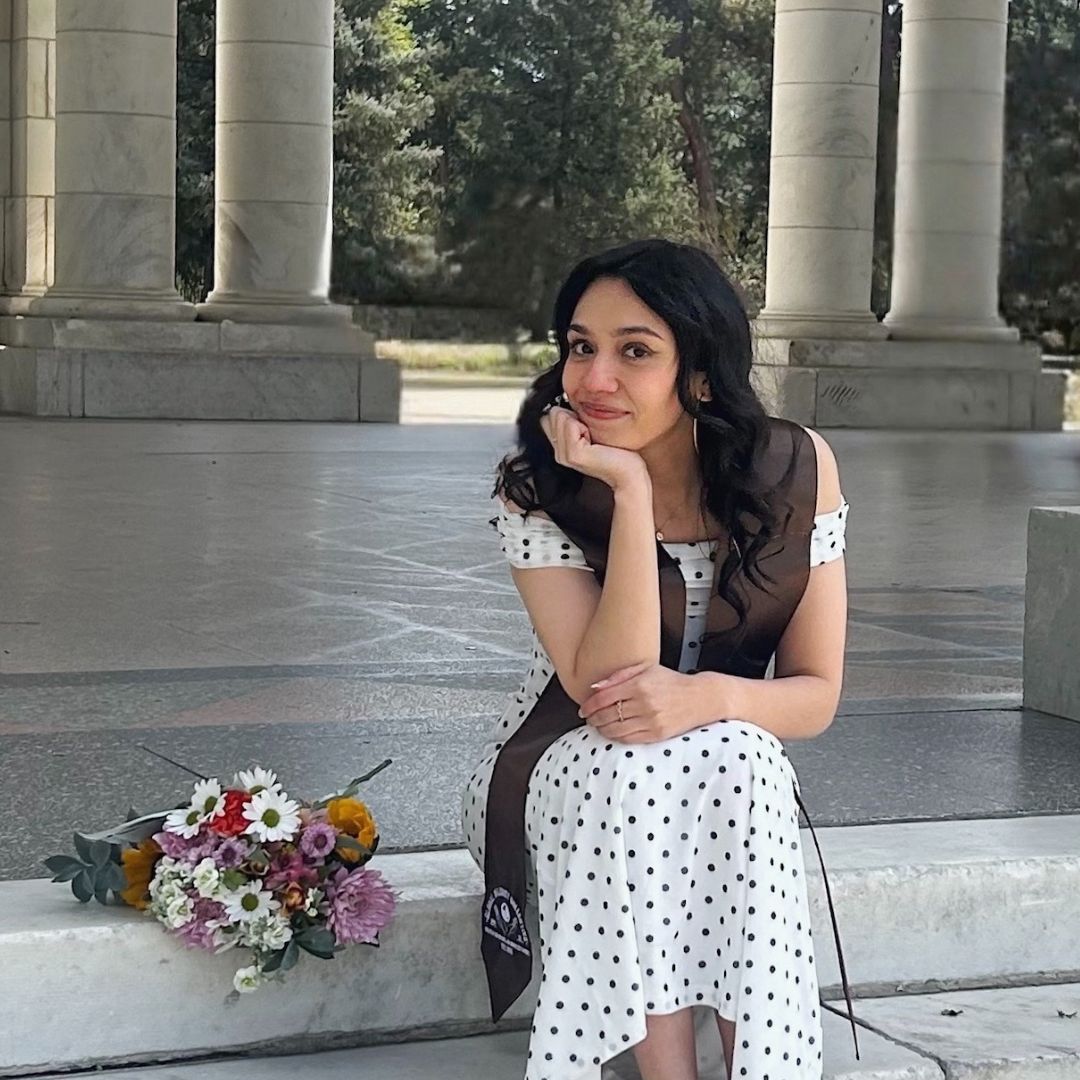
Andrea Rios: Advocating for Multilingual Communities
For Andrea Rios, earning a PsyD in School Psychology represents both a professional achievement and a personal commitment to serving multilingual communities.
Rios chose CU Denver because of the program’s bilingual Spanish-English concentration and the opportunity to directly support Spanish-speaking families during her clinical training experiences. “Receiving training in Spanish and being able to have placements where I would actively be serving the Spanish-speaking community was extremely important to me as a Spanish-speaking Latina student,” Rios says.
Throughout the program, Rios found support and mentorship through her cohort and the Global Majority Collective, a School Psychology organization created by and for Black, Indigenous, and People of Color (BIPOC) students. “Having this community made me feel like I could succeed in this program,” Rios reflects. “The support, mentorship, and space we provided for one another helped me navigate the program.”
Rios hopes future students remember that they belong in the program, even during difficult moments. “You were accepted into this program for a reason,” she says. “You will meet people who impact you deeply and help you navigate the program.”
Rios will continue serving multilingual families as a postdoctoral clinician at a private practice providing bilingual psychoeducational evaluations. Her work reflects the same values that guided her throughout graduate school: representation, advocacy, and culturally responsive care.

Marisha Lamont-Manfre: Bridging Research and Real-World Impact
When Marisha Lamont-Manfre entered the PhD program in Research and Evaluation Methods, she was looking for a way to combine her background in mathematics with her experience working in higher education. At SEHD, she found the perfect fit.
“This program was the perfect blend to further my experience in education and statistics,” Lamont-Manfre says.
Lamont-Manfre found meaningful connections with classmates and faculty while engaging in research, teaching, and leadership opportunities that shaped her professional identity. “I learned just as much through these opportunities as I did in class,” she explains.
Completing her dissertation and earning her doctorate marks the end of what Lamont-Manfre describes as “a very important era” in her life. Looking ahead, she is excited to continue pursuing projects that apply mixed-methods research in ways that create meaningful impact.
Her advice for future students is simple: take advantage of opportunities as they arise. “Each opportunity is a chance to continue learning and applying what has been learned in class,” she says.

Mazin Klapperich: Finding Confidence and Purpose in the Classroom
For Mazin Klapperich, becoming a teacher has been a journey shaped by mentorship, perseverance, and hands-on learning experiences.
Klapperich earned his bachelor’s degree in Education and Human Development along with teacher licensure in special education. Through CU Denver’s classroom-based teacher preparation program, he spent four years building confidence in real educational settings while gradually taking on more responsibility in classrooms and individualized education program (IEP) meetings.
“I would not feel confident or prepared to go into a teaching role if I had not had these experiences,” Klapperich says.
Early in his college experience, Klapperich faced the loss of his mother, a challenge that affected nearly every aspect of his life. During that difficult time, support from faculty, staff, and advisors helped him stay connected to his goals and future in education. Over time, his classroom experiences became a source of healing and renewed purpose.
“This program really brought some life back into me,” Klapperich reflects.
Although he originally planned to teach high school math, Klapperich discovered a passion for special education through his work with the Statewide Assistive Technology Augmentation & Alternative Communication (SWAAAC) program. Those experiences introduced him to a collaborative community dedicated to supporting students with disabilities across Colorado.
As he prepares to begin his career in education, Klapperich says SEHD helped him find both confidence and purpose as an educator. “They kept pushing me out of my comfort zone,” he says. “Eventually, it does come to you.”
Together, Vogler, Rios, Lamont-Manfre, and Klapperich reflect the many paths students take through SEHD and the shared commitment that connects them. As they step into careers in counseling, psychology, research, and education, they carry forward SEHD’s mission of supporting students, families, and communities through empathy, advocacy, and meaningful action.