

More Than a Stadium: Jennifer Greiving, Women’s Soccer, and the Power of Community Voice
As professional women’s soccer comes to Denver, a CU Denver PhD candidate helps ensure the future stadium reflects the families, neighborhoods, and voices that surround it.
Julia Cummings | School of Education and Human Development Jun 25, 2026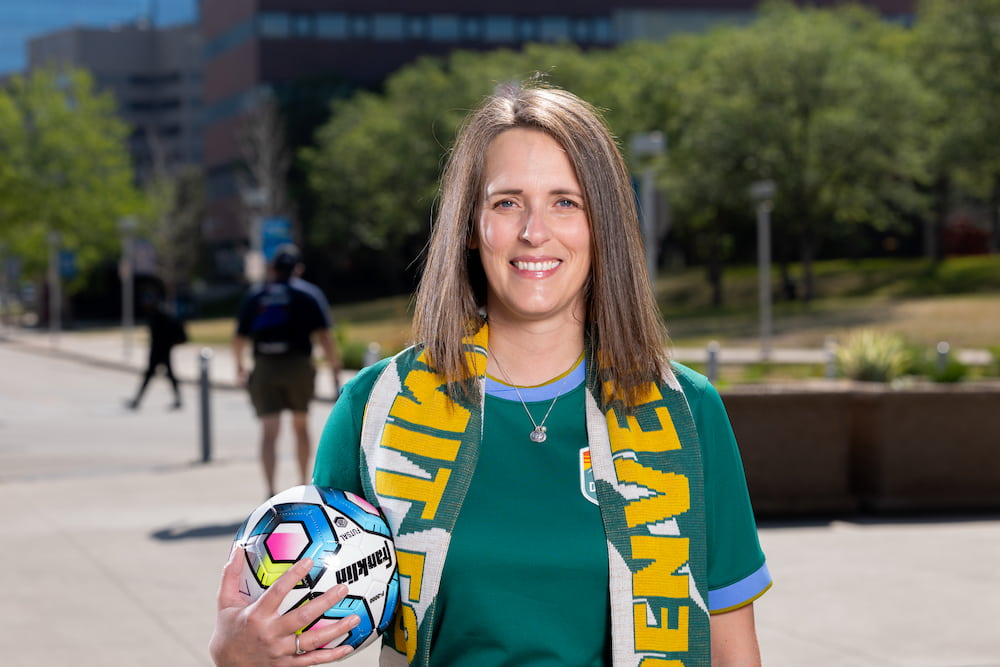
A Field Built on Possibility
On a stretch of land near Interstate 25 and Broadway in Denver, a new kind of gathering place is taking shape. As Denver’s National Women’s Soccer League team builds momentum, already drawing record breaking crowds, the site of their future stadium represents more than a new franchise. It signals possibility for young athletes, for families, and for communities that have too often been left out of development conversations.
For Jenn Greiving, a PhD candidate with a concentration in family science and human development in the School of Education & Human Development, that possibility became a call to action.
“We’ve always been a soccer family,” she said. “So, it was exciting to be part of something bringing women’s soccer to basically my backyard.”
Just under two miles from her home, the future women’s soccer stadium site feels personal. A longtime community advocate and current president of her registered neighborhood organization, Greiving stepped into the process not as a developer or policymaker, but as one of many community advocates helping shape how the project would serve the people around it.
Her excitement quickly deepened into something more intentional: a recognition that this moment of women’s professional sports arriving in Denver was also an opportunity to rethink how communities are included in decisions that shape their future.

Greiving at CU Denver
Where Research Meets Reality
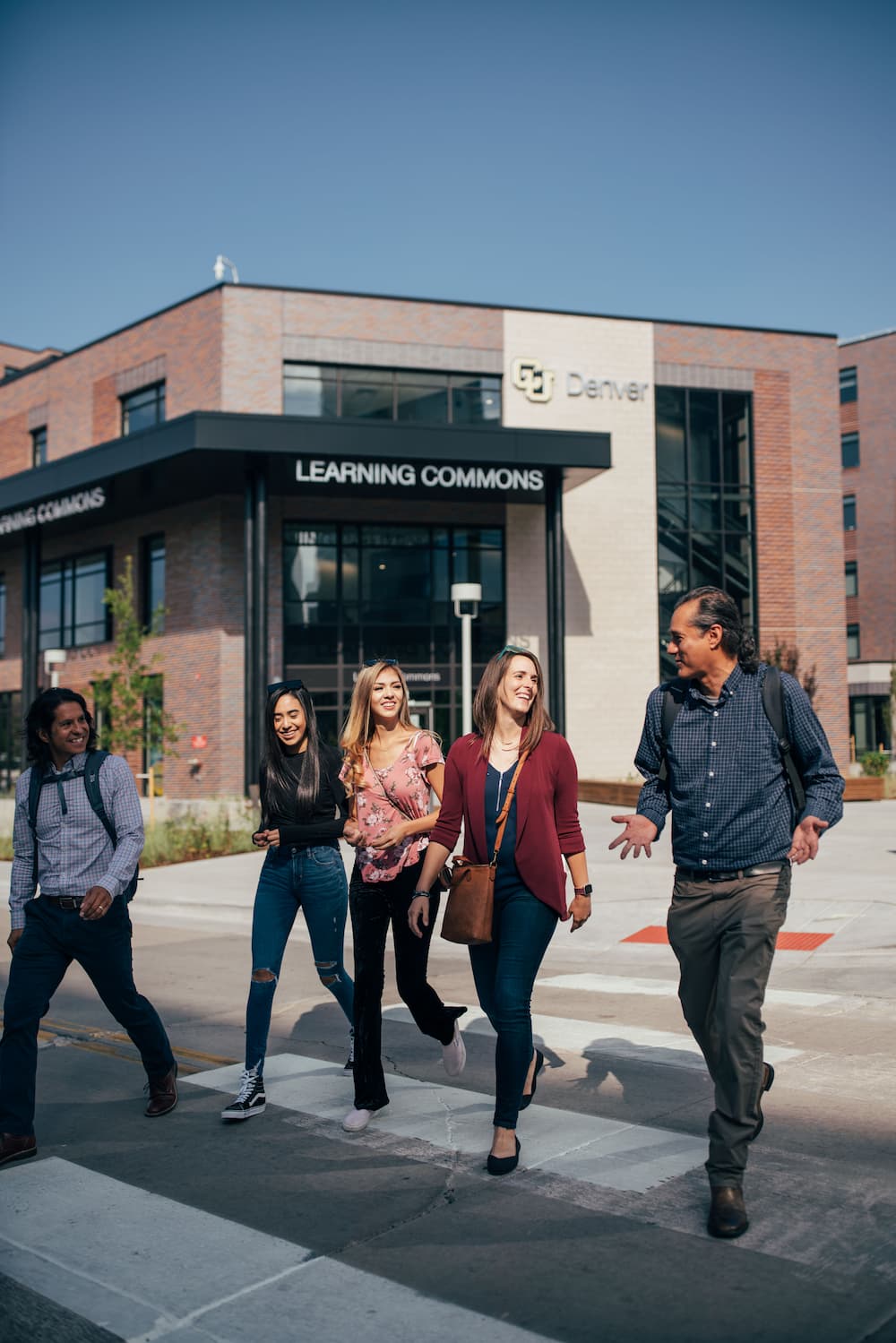
Greiving walking with HDFR faculty members and students on campus.
Greiving’s scholarly work centers on human development, family systems, and how people navigate complex roles across the lifespan. Her dissertation research explores the lived experiences of individuals within institutions, particularly mother-scholars in higher education, who balance caregiving, work, and academic life.
“In class, we talk about policy, about communities, about families over time,” she said. “And this experience drew on all of that in real time.”
Her academic training emphasizes that people experience social systems holistically. A stadium is not just a place to watch a game. When a stadium is built in a neighborhood, it touches on areas such as transportation and infrastructure, sustainability, youth opportunity, housing, and community belonging.
Listening as Leadership
Through West East Neighbors United (WENU), Greiving joined a diverse coalition of community representatives shaping a community benefits agreement tied to the stadium.
“It’s hard to get two people to agree on anything,” she said. “So, imagine a room full of people who care deeply about their neighborhoods.”
In that space, listening became essential.
“It wasn’t just about hearing the people who were speaking,” she said. “It was about noticing who wasn’t talking and making sure those voices were included.”
A Stadium That Reflects Its Community
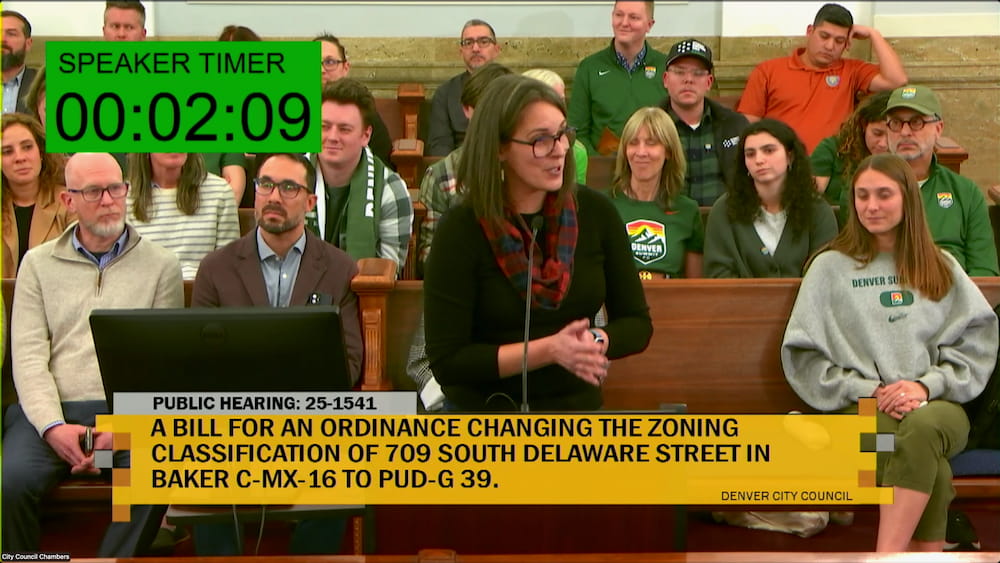
Greiving testifies at Denver City Council about the soccer stadium community agreement.
Denver City Council approved the community agreement to ensure the stadium serves as a community asset.
Plans include expanded access to games, youth soccer opportunities, partnerships with local schools, and meeting spaces for neighborhood organizations. The emphasis on women’s sports amplifies this impact. It creates visible pathways for young people, especially girls, to see themselves in sports leadership and beyond.
At the center of the agreement is a community investment fund designed to support neighborhood priorities over time.
“We can’t fix everything at one point in time,” she said. “But we can create a way to keep investing, to keep listening, to keep responding to community groups,” said Greiving.
This long-term approach recognizes the deeper history of the surrounding neighborhoods and focuses on sustained community connections.
A Different Kind of Win
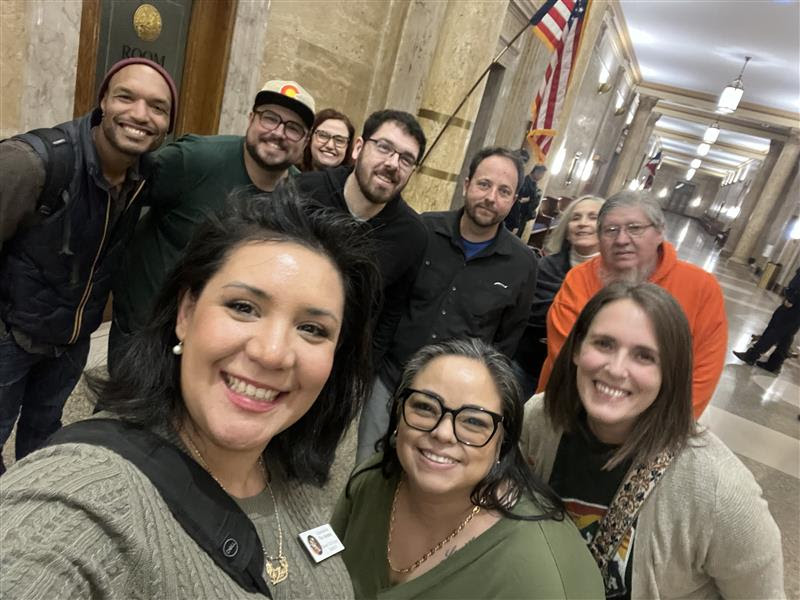
Greiving and other WENU members with Councilwoman Flor Alvidrez at the City and County of Denver Building.
As the stadium moves toward completion, the most important outcomes are already emerging in stronger relationships, shared decision-making, and community voice.
“People need to feel like they have a seat at the table,” Greiving said.
Because in the end, this important work is not just about a soccer stadium. It is about what happens when communities are included, when women’s sports take center stage, and when progress is defined by belonging as much as by what is built.