

In the Age of AI, Bud Talbot Still Believes Impactful Learning Is Relational
Julia Cummings | School of Education and Human Development Aug 14, 2026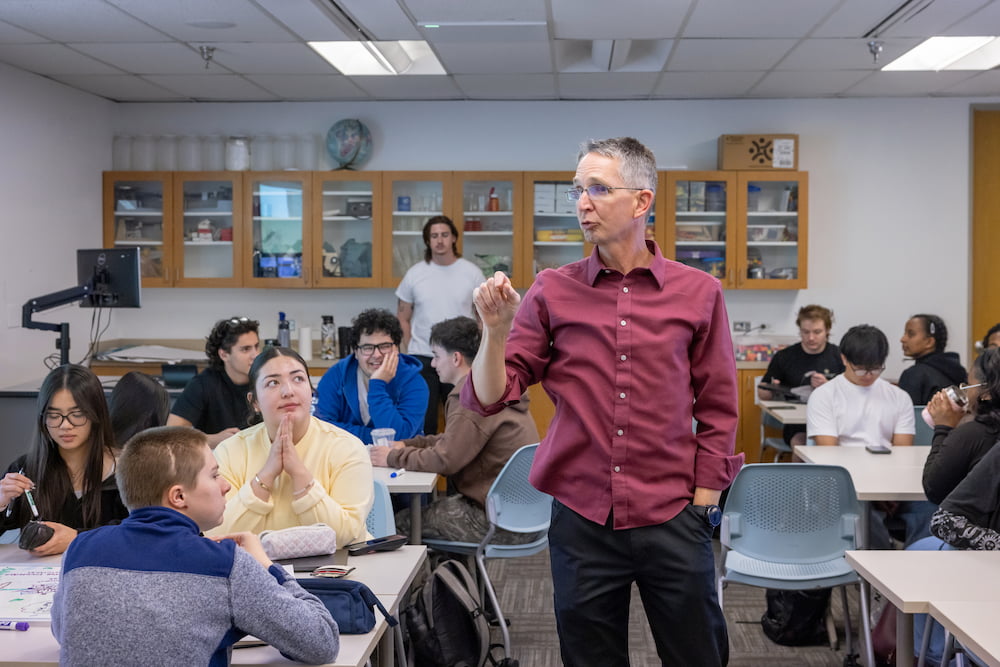
For more than two decades, nationally recognized STEM education researcher Robert "Bud" Talbot, PhD, associate professor of STEM Education at CU Denver, has studied a deceptively simple question: How do people learn science? Today, as artificial intelligence reshapes classrooms and workplaces, that question feels more urgent than ever. Rather than viewing AI as a threat to education, Talbot sees it as the next frontier in a career devoted to understanding human learning, belonging, and student success. The challenge, he says, is ensuring that technology strengthens the relationships, conversations, and curiosity that drive meaningful learning in the first place.
This former high school physics teacher and program director in the division of Undergraduate Education in the STEM Education Directorate at the National Science Foundation describes teaching and learning as inseparable pursuits. His research has always been driven by curiosity about how people learn, how educators can create environments that support that learning, and how those lessons can be applied to new challenges. Today, that curiosity is helping him explore one of higher education's most pressing challenges: how does the use of artificial intelligence impact learning while preserving the human connections that make learning meaningful.
Across his career, Talbot has studied the conditions that help students thrive, not only academically, but also in developing confidence, belonging, and a sense of identity in STEM. His research points to a consistent conclusion: learning is fundamentally social. Students learn best when they can engage in discourse with one another, exchange ideas, ask questions, test their thinking, and feel safe contributing to the conversation. In other words, memorable and impactful learning does not happen in isolation. It happens through relationships.
Dr. Talbot teaching science to CU Denver undergraduate students.
For Talbot, meaningful learning doesn't emerge from information alone. It grows out of conversation. Decades of research have reinforced his belief that students learn best when they feel safe asking questions, sharing ideas, and challenging their assumptions alongside others. Creating that kind of environment requires more than strong instruction. It requires trust, belonging, and a classroom culture where every learner feels valued and respected. Those conditions, Talbot argues, make genuine discourse possible, and through that discourse, students learn.
Engaging Learners
Those ideas helped shape CU Denver's Learning Assistant Program, where undergraduate STEM students serve as peer mentors in undergraduate STEM classrooms. For Talbot, the program represents one of the clearest examples of relational learning in action. Learning Assistants are more than academic helpers. They are living proof of what's possible. Having recently completed the same courses in which they are working, they can connect with students in ways professors often cannot, helping them navigate challenges, build confidence, and envision their own success. When students see someone who looks like them, comes from a similar background, or has overcome similar obstacles, Talbot said, they begin to picture themselves succeeding in STEM Education.
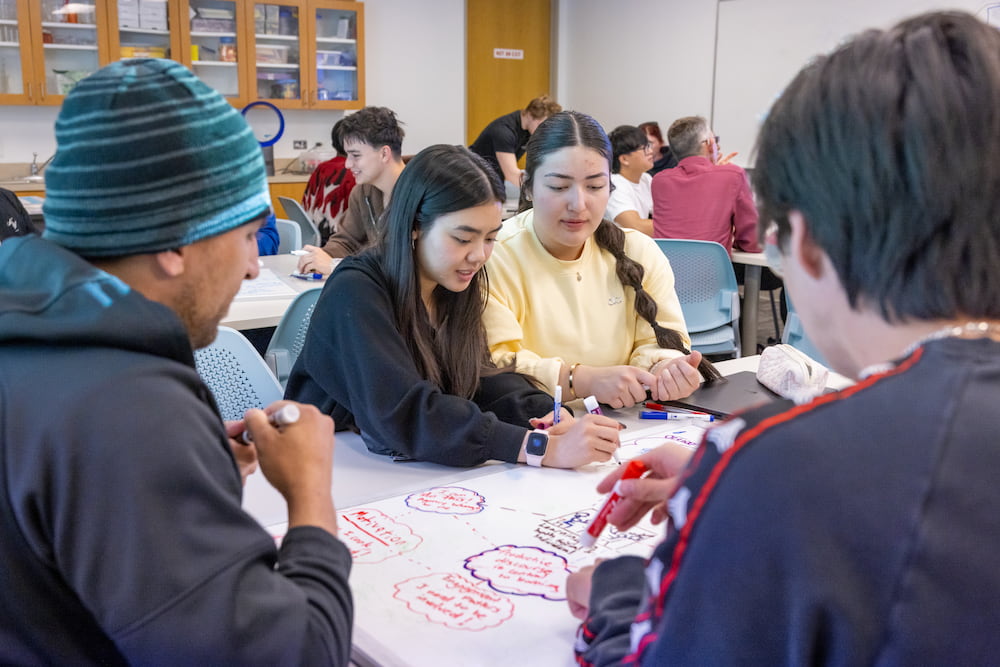
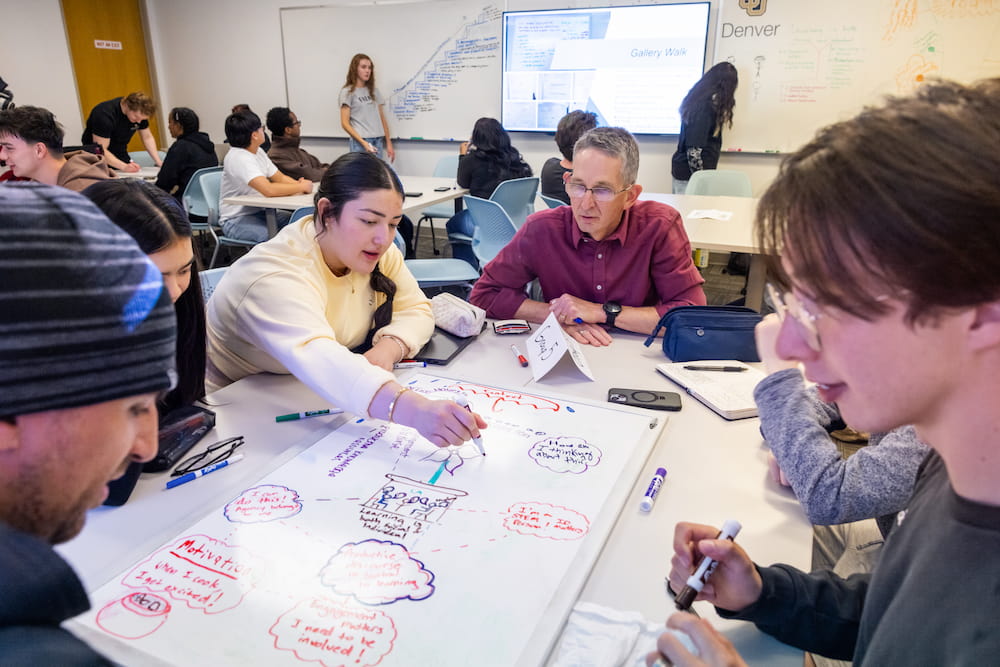
CU Denver STEM Ed students learning in groups
The Learning Assistant Program also reflects a lesson Talbot has spent much of his career teaching fellow educators. Great teaching is not about delivering information. It is about creating the conditions for learning to happen. For decades, STEM education has often centered on expert lectures and content delivery. Talbot's research supports the advancement of a different approach; one built around participation, collaboration, and active engagement. The most effective classrooms are not the ones where students sit quietly absorbing information. They are the ones where students discuss ideas, ask questions, test concepts, and learn from one another.
"A lecture is not teaching, and delivering content is not teaching," Talbot said. Teaching, in his view, means creating environments where students can engage with ideas, instructors, and one another in ways that deepen understanding and spark curiosity.
AI as a Tool
Those same questions are now shaping Talbot's latest area of inquiry: artificial intelligence. As AI tools become increasingly common in classrooms and workplaces, many educators worry that technology could weaken the human connections that make learning meaningful. Talbot sees a different possibility. Rather than replacing relationships, he believes AI might be able to help strengthen learning when educators use it to support conversation, collaboration, and critical thinking, all while preserving human to human discourse, which is essential to learning.
For Talbot, the goal is not to determine whether students can learn from AI. It is to understand how AI can support the kinds of relational learning environments that decades of research have shown to be most effective. His current work explores how AI can complement peer mentoring, classroom discussion, and active engagement while preserving human metacognitive effort and strengthening the human interactions that foster belonging, confidence, and deeper understanding.
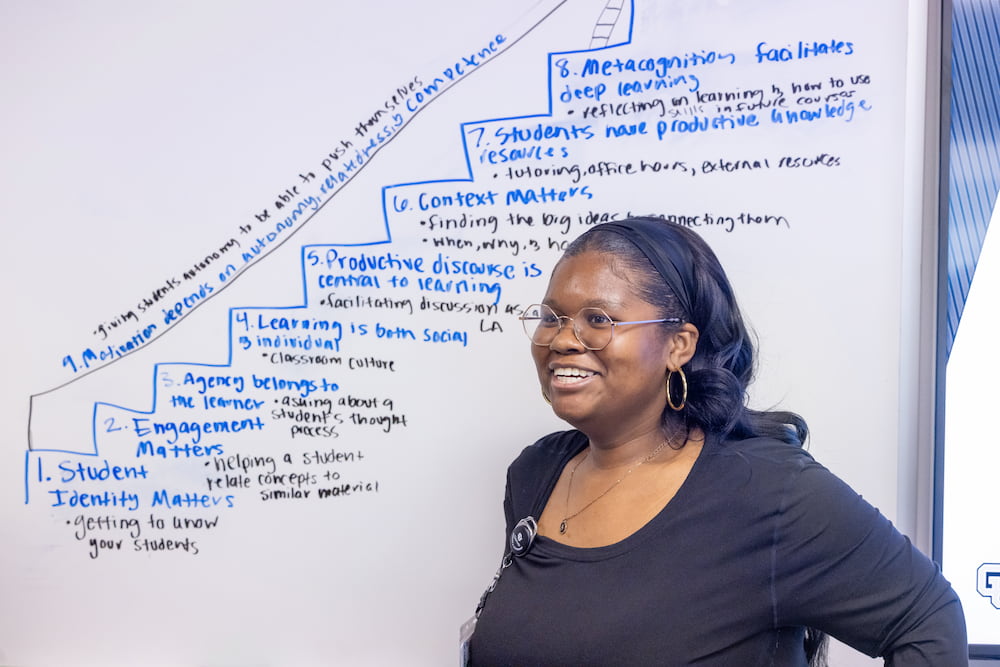
A CU Denver student draws on the whiteboard, explaining STEM Ed learning processes
In many ways, Talbot sees AI as an opportunity to test and refine what researchers know about learning itself. While technology may help students access information more quickly than ever before, he argues that the social dimensions of learning remain irreplaceable. Curiosity, collaboration, communication, metacognition, and the ability to learn with and from other people can’t be outsourced. They are the very qualities that make learning memorable.
For Talbot, AI does not change the central question that has guided his career. It simply raises the stakes. As educators explore new technologies, his research offers a timely reminder. Memorable and impactful learning has never been about transferring or absorbing information. It has always been about relationships and discourse.