

In Memoriam: Ron Tzur
Aug. 8, 1955 – July 8, 2026
Jul 14, 2026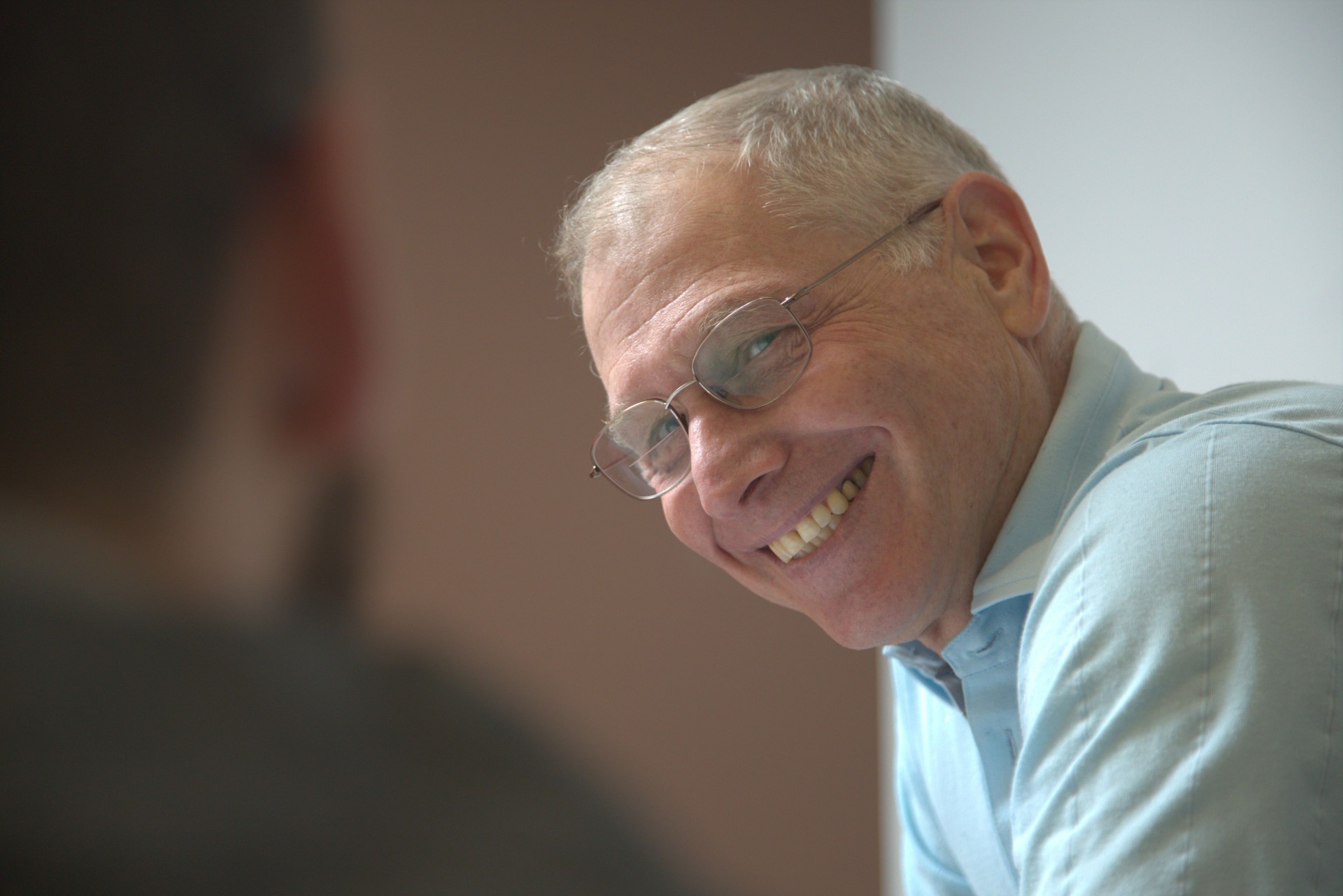
The CU Denver School of Education & Human Development (SEHD) mourns the loss of Ron Tzur, PhD, professor emeritus of mathematics education, respected researcher, devoted mentor, and cherished colleague, who passed away on July 8, 2026, after a long and valiant battle with cancer.
Throughout a distinguished career spanning more than four decades, Tzur dedicated his life to understanding how people learn mathematics and how educators can create learning experiences that help every student succeed. His prolific scholarship and published research influenced mathematics education nationally and internationally, and he remained an active contributor to the field through the final year of his life. Through both his research and teaching, he worked tirelessly to make mathematics more accessible, meaningful, and empowering for all learners. Colleagues remember his warmth, generosity, and commitment to others.
Born and raised on Kibbutz Mishmar HaEmek in Israel, Tzur often reflected on how his upbringing shaped his commitment to community, equity, and social justice. The values of caring for others, supporting learners, and contributing to the collective good became guiding principles throughout his life and career.
"Education is the key to a life worth living," Tzur wrote in his SEHD faculty biography. He viewed education as a partnership among learners, educators, and communities. Whether he was teaching a course, leading a research project, or serving on a committee, he sought to create spaces where dialogue, mutual respect, and lifelong learning could flourish.
Tzur joined CU Denver in 2009 and quickly became a cornerstone of the SEHD’s mathematics education program. An internationally recognized scholar, he focused his research on understanding how students develop complex mathematical ideas and how teachers can support that learning through responsive, research-based instruction. His work examined students' conceptualization of challenging mathematical concepts—particularly multiplicative reasoning and fractions—as well as the cognitive and social processes that support learning. He also developed theoretical frameworks connecting mathematics learning, teaching practices, and the brain-based processes underlying human understanding.
One of Tzur's most influential contributions was the development and advancement of student-adaptive pedagogy, an approach that encourages teachers to build instruction to meet students where they are and then help them construct increasingly sophisticated mathematical ideas. His work challenged educators to see mathematical reasoning as something to be nurtured rather than delivered.
That philosophy was at the heart of a landmark National Science Foundation-funded project that Tzur led at CU Denver. Backed by a $3 million grant, the project helped elementary teachers develop stronger approaches to teaching multiplication, division, and fractions. Working alongside faculty colleagues, graduate researchers, and partner school districts, Tzur designed professional learning experiences that emphasized problem-solving, conceptual understanding, and responsiveness to student thinking. Through engaging classroom activities and collaborative coaching, the project helped teachers deepen their understanding of mathematics while improving student learning outcomes.
Tzur's impact extended far beyond university classrooms. Through a long-running partnership with Sheridan School District No. 2, he worked alongside educators to strengthen mathematics instruction and build teacher expertise. The resulting gains in student achievement drew attention across Colorado and reinforced Tzur's belief that investing in teachers' mathematical understanding is one of the most effective ways to improve outcomes for students, particularly those from historically underserved communities.
At CU Denver, Tzur brought his research directly into the classroom. He taught courses including Theories of Mathematics Learning, Mathematics Teaching—Theory and Practice, Developmental Pathways in Students' Mathematical Thinking, and Mathematics for Elementary Teachers. He also guided doctoral candidates through dissertation research, helping develop the next generation of mathematics education scholars.
His classes challenged students to move beyond memorizing procedures and instead explore how mathematical understanding develops. By blending theory, research, and practice, he encouraged future educators to think deeply about learning and teaching. Tzur often said that he loved his students and admired their choice of profession. He understood that many arrived with concerns about mathematics and its teaching, and he worked tirelessly to help them build confidence, strengthen their reasoning, and discover new possibilities for themselves as educators. His students remember a professor who expected excellence while offering unwavering support, encouragement, and care.
"Ron brought extraordinary wisdom, humanity, and generosity to our school’s community," said Marvin Lynn, PhD, dean of the CU Denver School of Education & Human Development. "He was a brilliant scholar whose work transformed the field of mathematics education; but, what I will remember most is how deeply he cared for people. Ron believed in the potential of every student, every teacher, and every learner. He built communities where people felt seen, supported, and challenged to grow. His legacy lives on not only through his influential research, but through the countless lives he touched as a mentor, colleague, teacher, and friend. We are better because Ron was part of our community, and he will be deeply missed."
Outside his professional life, Tzur enjoyed Israeli folk dancing, singing, listening to music of all genres, skiing, hiking, reading, and playing basketball. Those passions reflected the same energy, joy, and sense of connection that characterized his work as an educator and scholar.
Tzur is survived by his wife, Cheryl Guo, his daughter, Lihi, and many family members, friends, colleagues, and former students around the world.
In accordance with his wishes, there will be no formal public memorial service.
“Dr. Tzur will be remembered as a scholar who advanced the field of mathematics education, a teacher who inspired generations of educators, and a compassionate human being who never stopped believing in the power of learning to improve lives,” said Nicola Hodkowski, PhD, former student who collaborated with Tzur on grants and published research who is director of mathematics education research at Digital Promise Global. “His influence will continue to be felt in classrooms, schools, and communities for years to come.”